Systematizing dispute resolution for HCA Healthcare.
HCA's revenue cycle teams were tracking disputed insurance claims through email threads and spreadsheets, with no shared system of record. Over a 19-month engagement, I did the hands-on design work myself, research, workflow design, wireframing, and prototyping, while directing two Nexient designers and working closely with one HCA design counterpart, alongside a full team of developers and a project owner. The tool we shipped recovered more in insurance reimbursements than it cost to build.
Thousands of claims, no shared system.
HCA Healthcare is one of the largest for-profit hospital operators in the United States, managing hundreds of facilities and processing thousands of insurance claims annually. When an insurer denies or underpays a claim, HCA's revenue cycle teams have to initiate a dispute, track the case through a multi-step process, and ultimately collect the owed reimbursement. This work affects the organization's bottom line directly.
A process that lived entirely in inboxes.
Before this project, HCA's dispute resolution process ran on email threads and Excel spreadsheets. Revenue cycle staff across the organization had no shared system of record. Cases were tracked manually, updates traveled through forwarded emails, and the status of any given dispute depended entirely on whoever happened to be managing it at the time.
- No visibility into where a case stood in the process at any given moment
- No reliable way to know whether a claim had been collected, how much was recovered, or when it needed follow-up
- Cases fell through the cracks as they moved between staff members with no formal handoff
- Leadership had no way to report on pipeline health, recovery rates, or team workload
- The process depended entirely on individual staff knowledge, making it fragile and hard to scale
Player-coach, not just director.
I served as UX Director on this engagement, working as a player-coach. Rather than delegating and reviewing, I did a lot of the hands-on design work myself: research, workflow design, wireframing, and prototyping, alongside two Nexient designers I directed and one HCA counterpart I worked closely with. I also partnered with Nexient's development team and product owner to make sure decisions held up technically.
Understanding the financial stakes.
I started by interviewing revenue cycle leadership, operations managers, and IT stakeholders at HCA to understand the business context, the financial stakes, and the organizational constraints. A key insight from these conversations: the problem wasn't just operational friction. The inability to reliably track and recover disputed claims represented a measurable revenue gap that leadership was under pressure to close.
Watching the actual work happen.
We followed stakeholder interviews with in-depth sessions with the people doing the dispute work day to day. Revenue cycle staff walked us through their process, sharing their screens, their inboxes, and their spreadsheets. We watched how they tracked a case, how they decided what needed attention, and how they handed off work to the next person in the process.
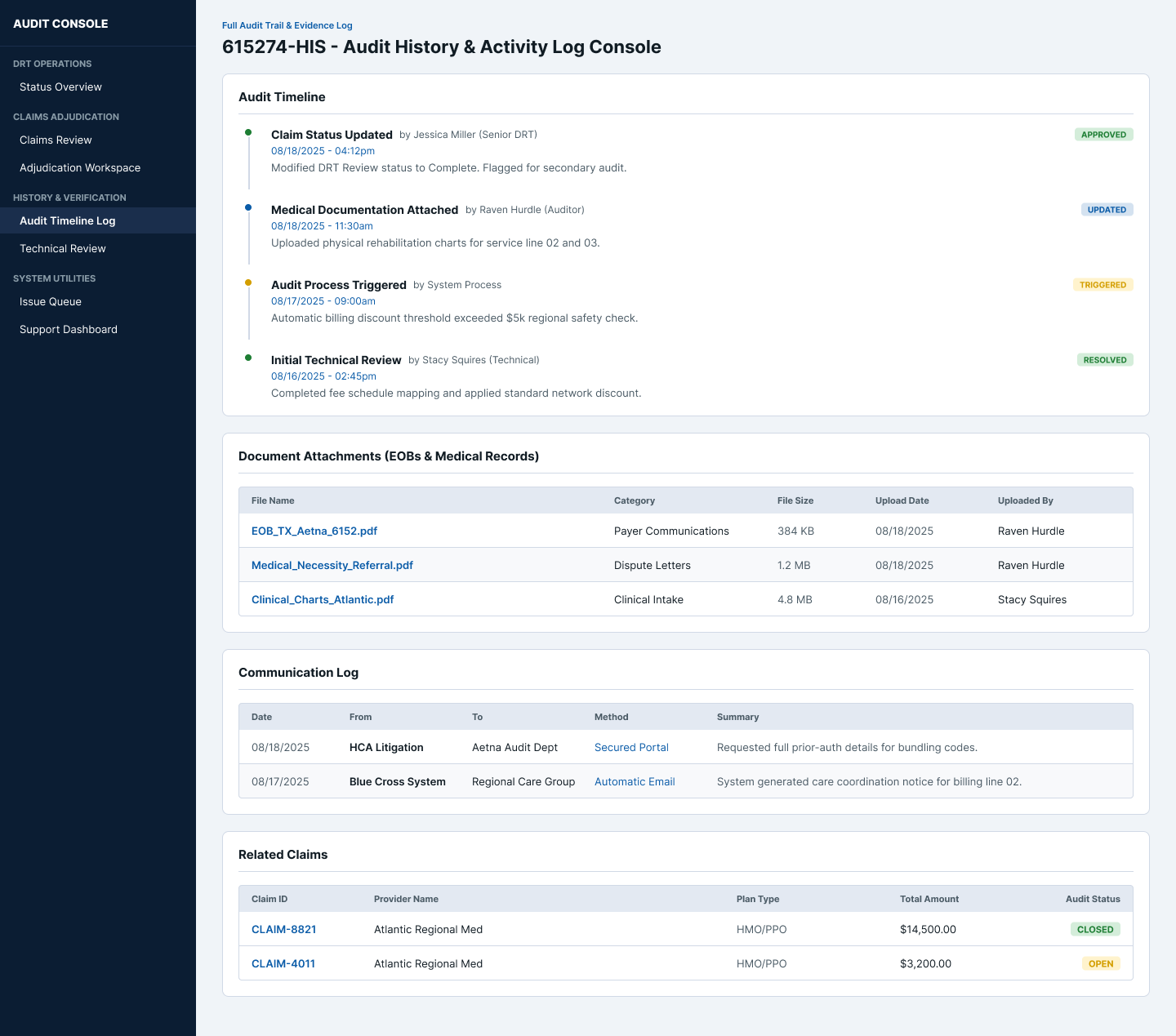
- Staff spent significant time reconstructing case history from email threads before they could take any action
- There was no consistent definition of what stage a dispute was in, making it hard to prioritize or escalate
- Handoffs between staff members happened via email, with no guarantee the next person had full context
- When a claim was paid, the update was often lost in the same email chain as everything else
The problem wasn't operational friction. It was a measurable revenue gap that leadership was under pressure to close.
Making the breakdown visible.
We synthesized our research into a journey map that traced a dispute from initial denial through final resolution, and a service blueprint that showed what was happening at the front stage (staff actions), back stage (system and process dependencies), and support channels. This made it immediately clear where the handoff gaps were, where visibility broke down, and which moments in the process carried the highest cost if something went wrong.
Structure without bureaucracy.
The core design challenge was translating a messy, ad hoc process into a structured, trackable workflow without making it feel bureaucratic or slowing down staff who were already under pressure. I worked directly with HCA stakeholders to define the stages of a dispute and the rules that governed when a case moved from one stage to the next, then designed the workflow logic myself before handing it to the team to build out.
- Case intake and claim documentation
- Initial review and assignment to a dispute specialist
- Active dispute work, including insurer outreach and documentation
- Escalation if needed
- Resolution, with outcome tracked as collected, denied, or appealed
Replacing email archaeology with a glance.
A progress indicator became a central feature of the interface. Staff and supervisors could see at a glance where any dispute sat in the process, how long it had been in the current stage, and what action was required next. This replaced the mental overhead of parsing email threads to reconstruct case status.
Handoffs built into the system, not the inbox.
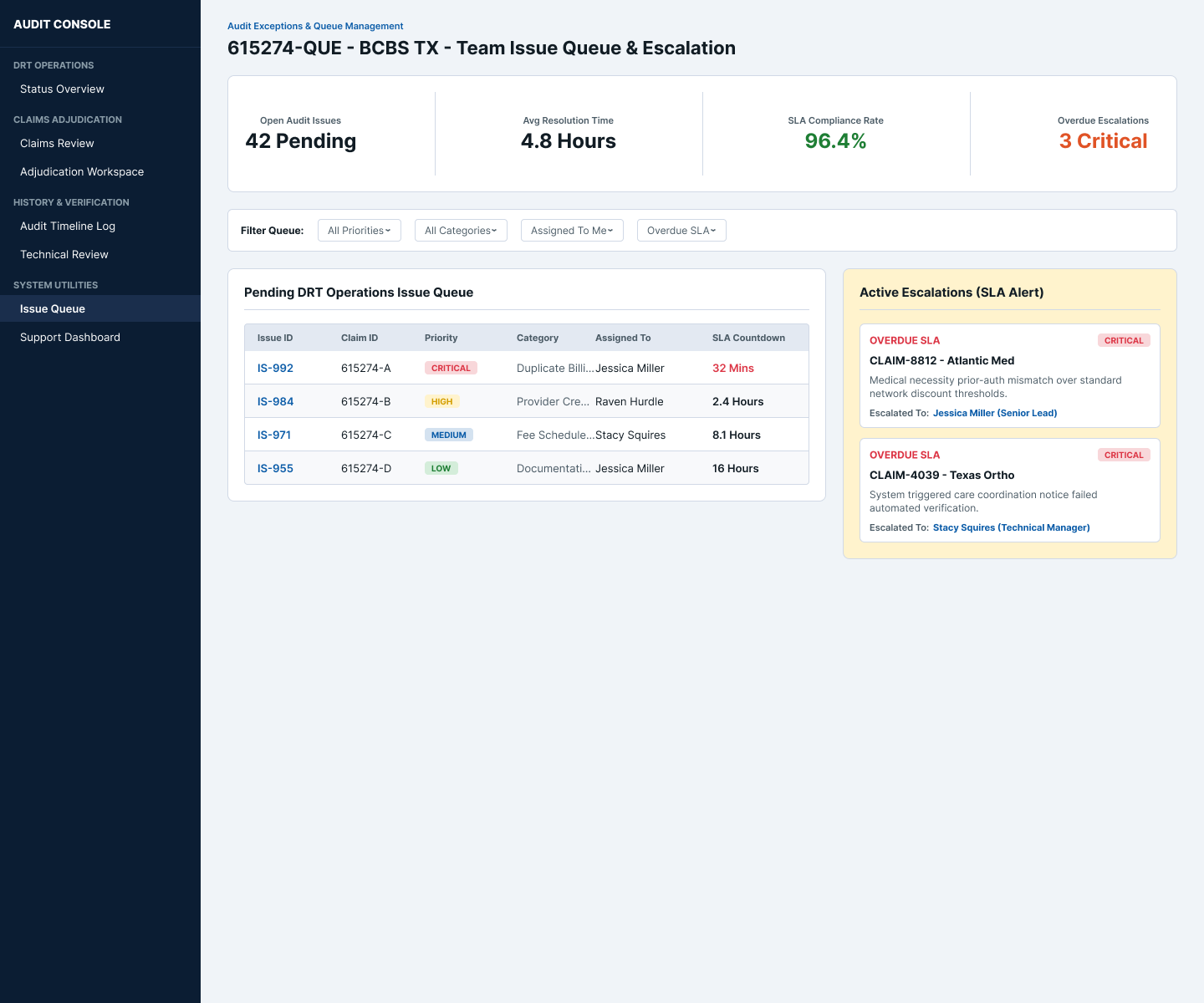
Rather than routing cases informally through email, the system assigned tasks to the appropriate person at each stage of the workflow. When one person completed their step, the case automatically advanced and surfaced in the next assignee's queue. This gave the team a structured handoff mechanism and eliminated the risk of cases stalling between staff members.
Validating with the people doing the work.
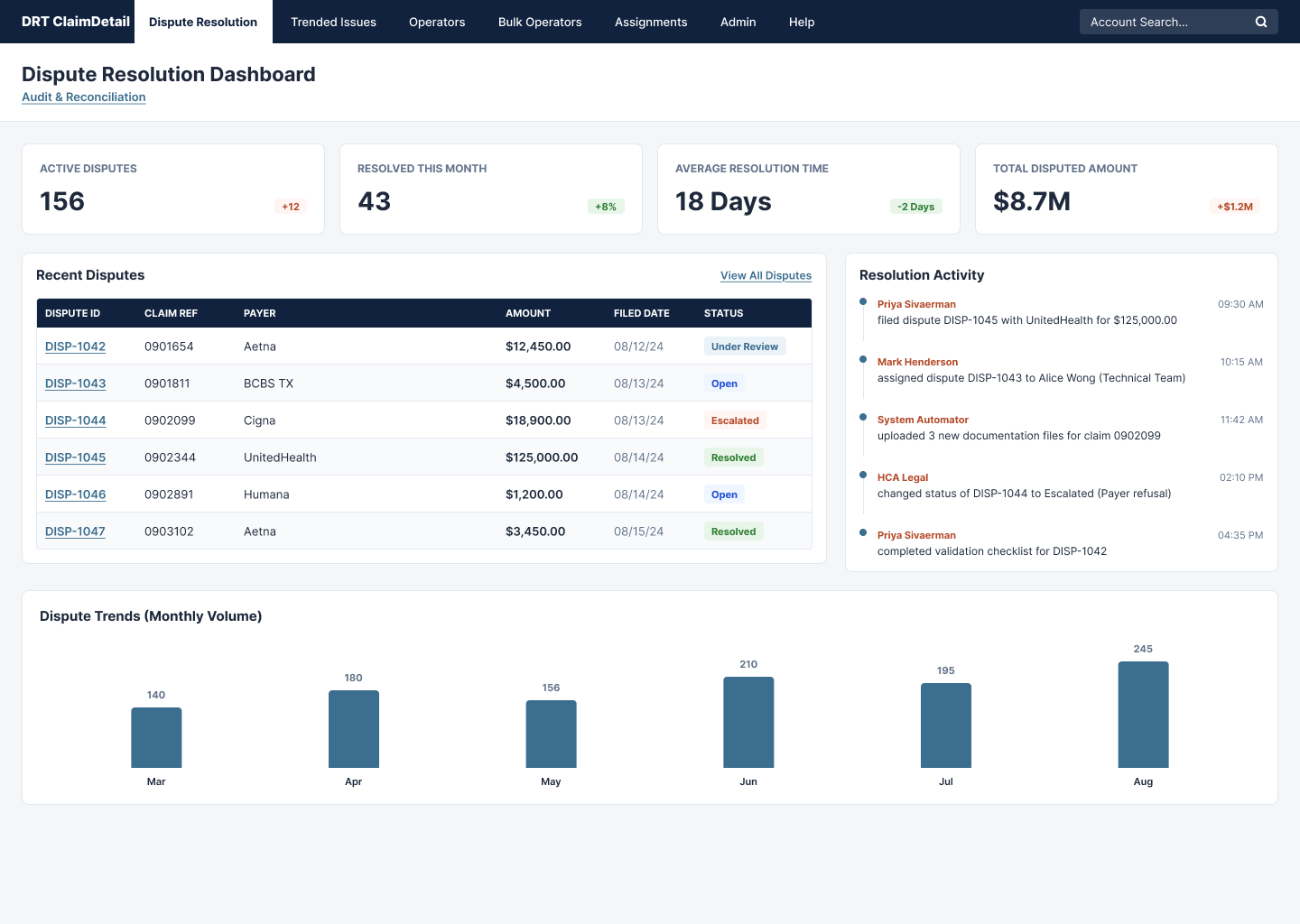
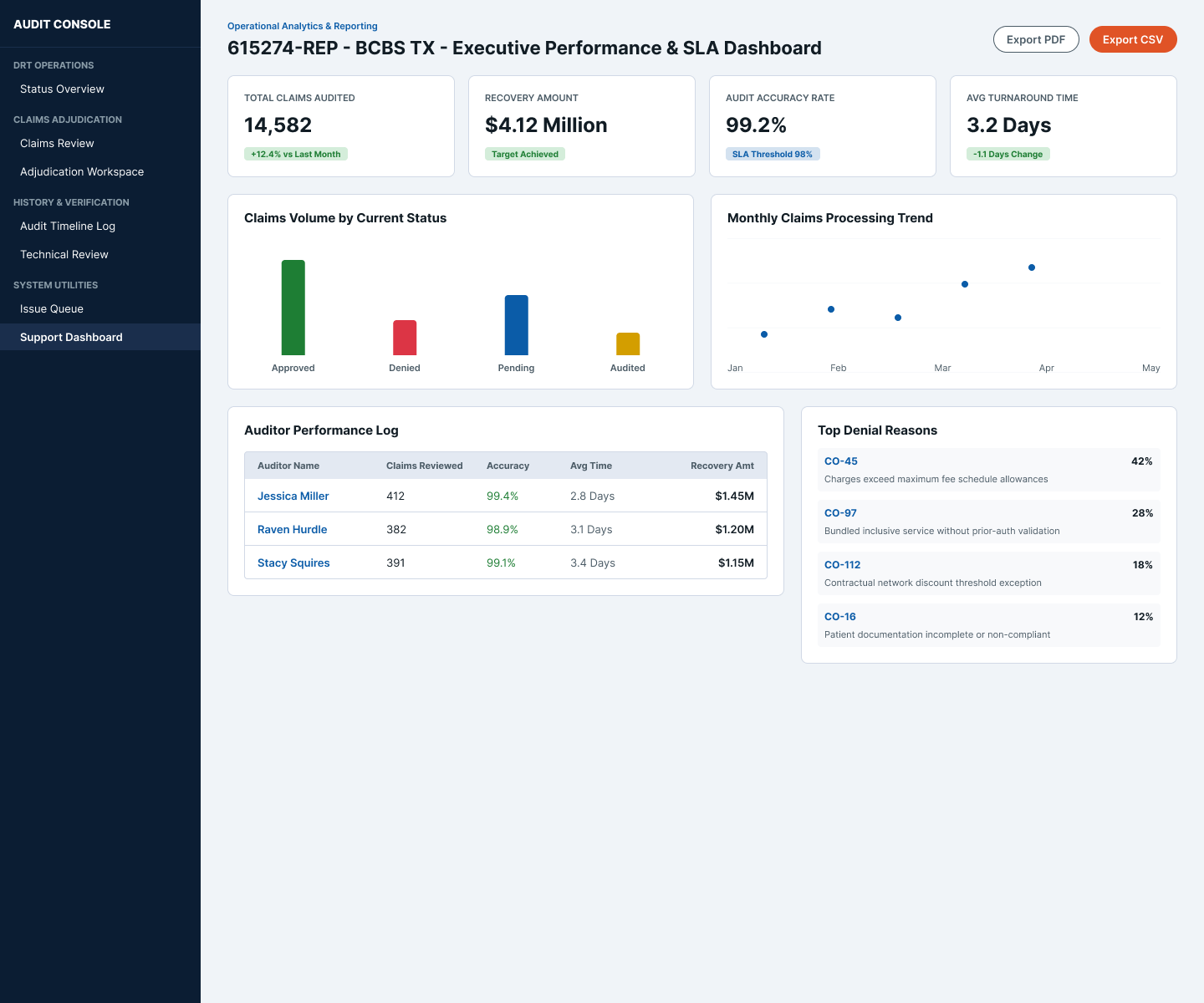
I personally wireframed and prototyped the core flows, moving quickly from low-fidelity sketches to higher-fidelity prototypes in Figma, then brought the Nexient designers in to iterate alongside me. We validated our designs with revenue cycle staff throughout, checking that the workflow logic matched how they actually thought about their work, that the task structure felt manageable, and that the progress visualization was genuinely useful rather than decorative. I paid particular attention to the dashboard view for supervisors, who needed a way to scan team workload, flag stalled cases, and understand recovery performance without digging into individual records.
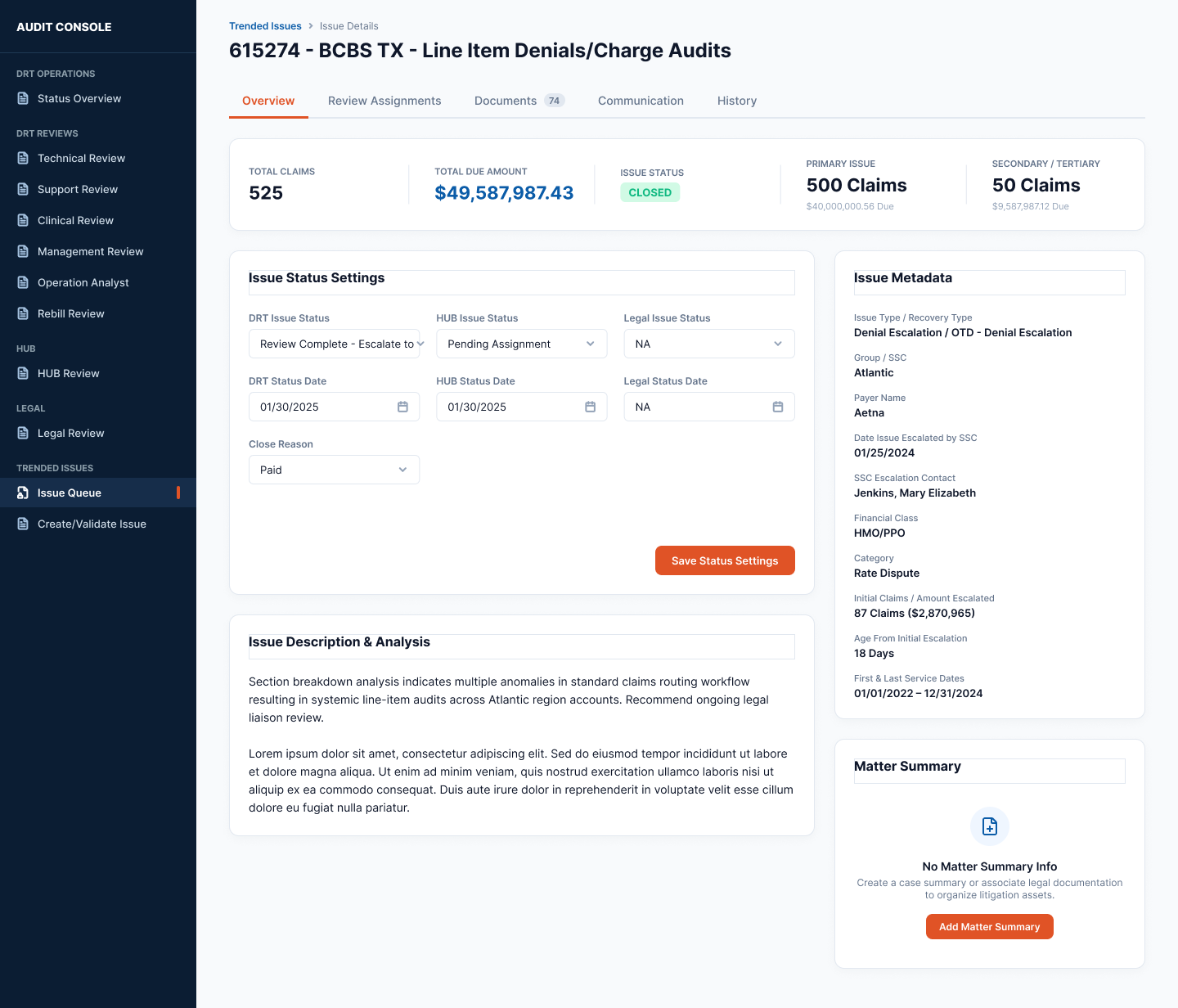
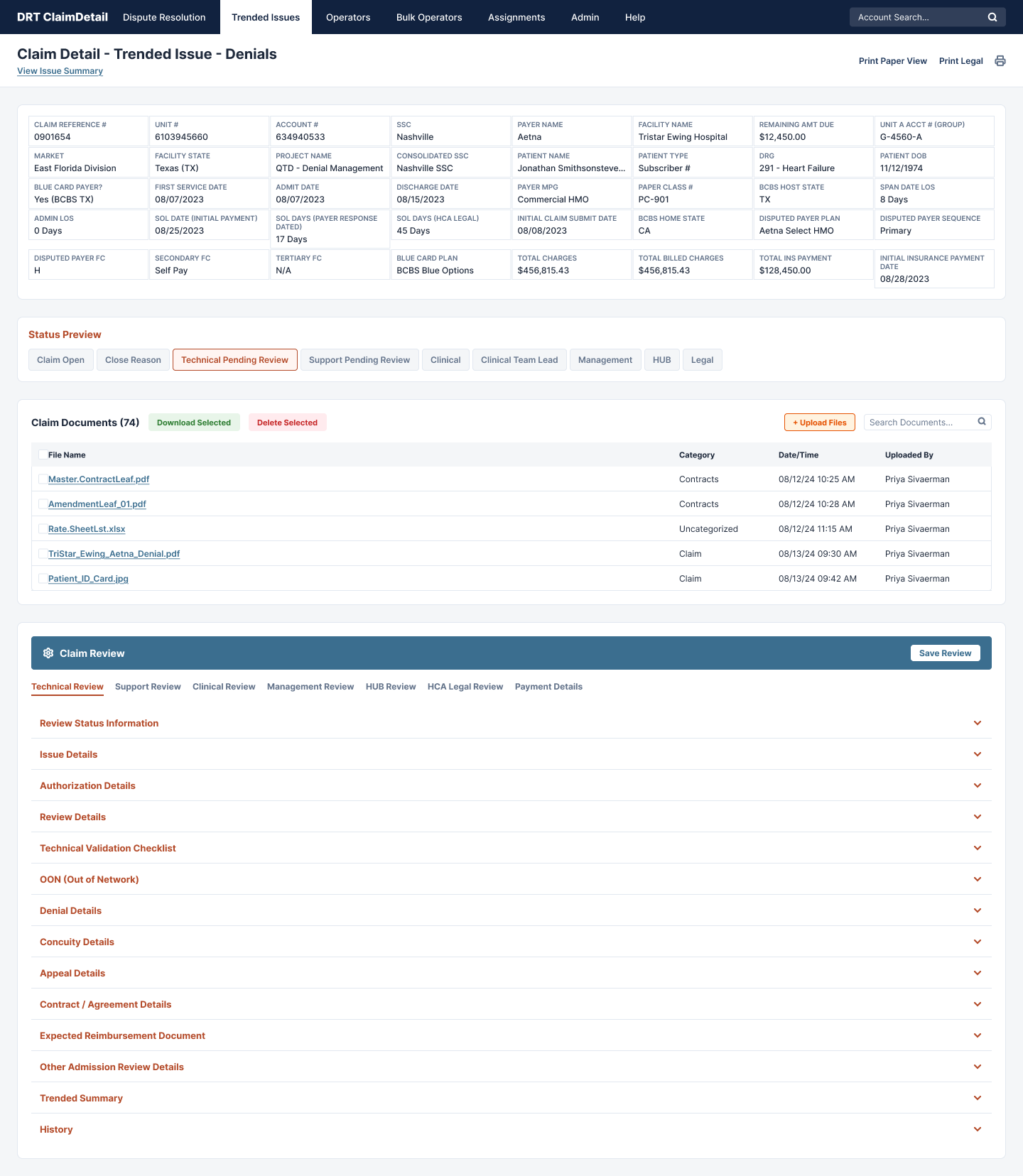
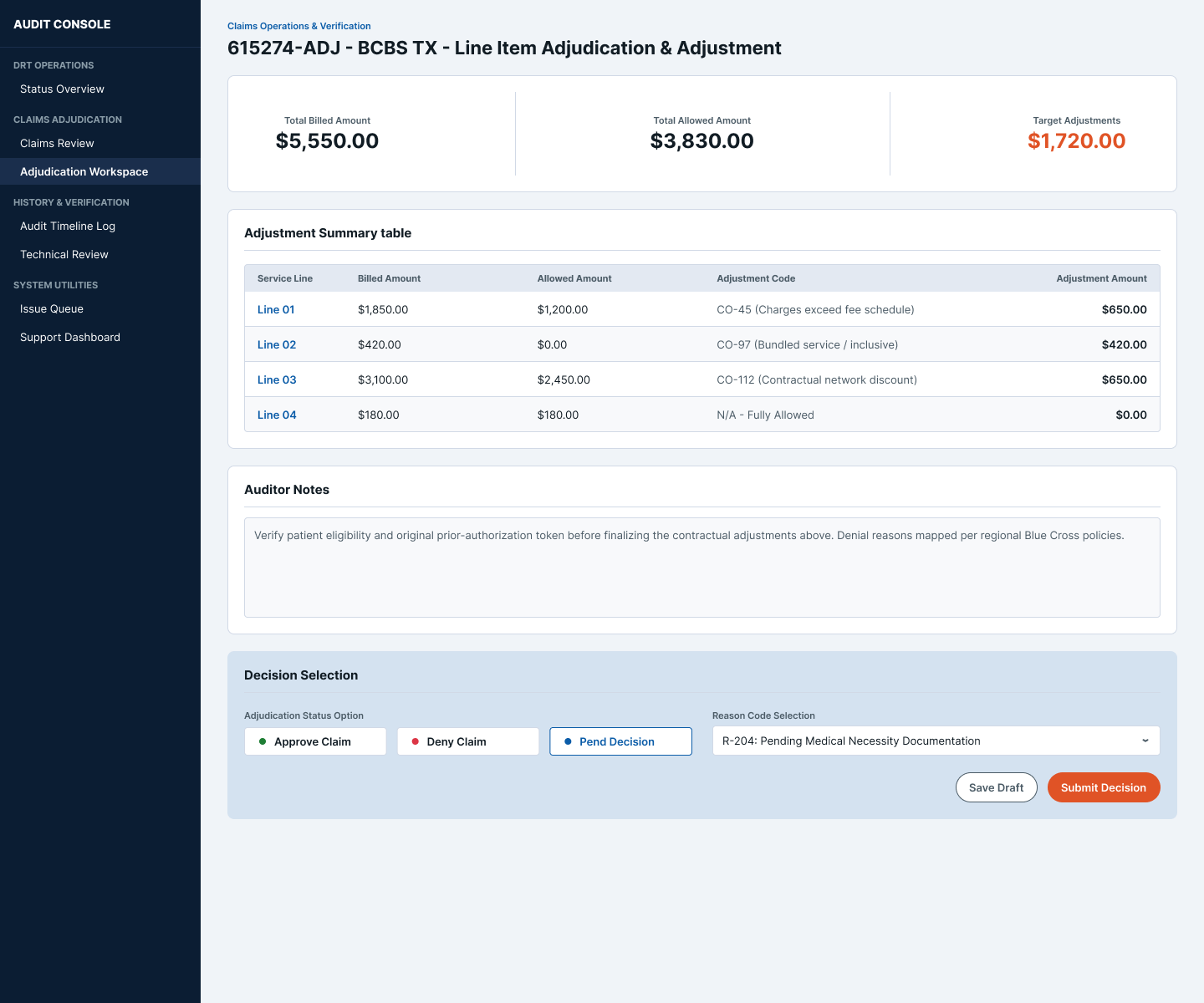
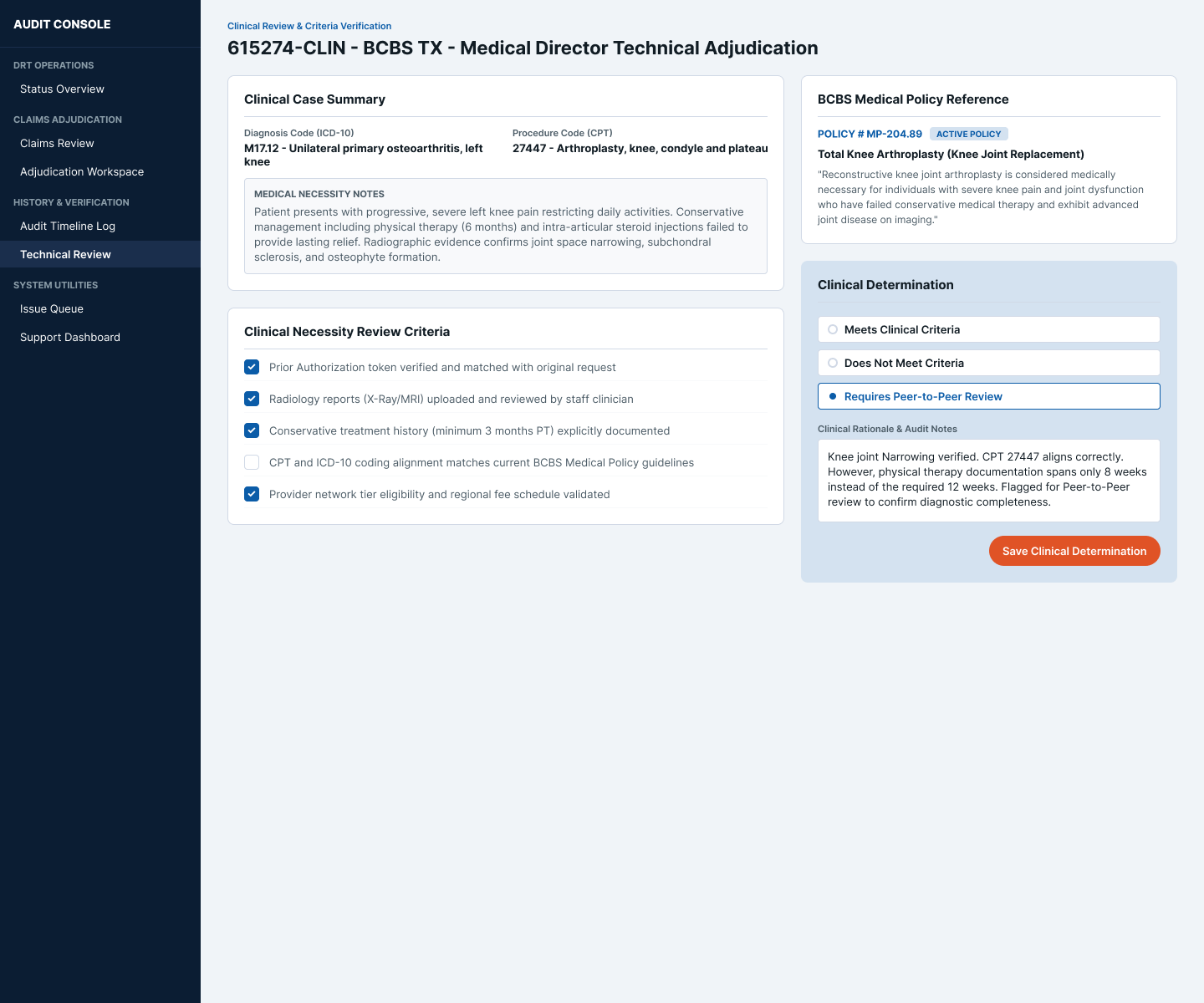
Key screens from the final tool.
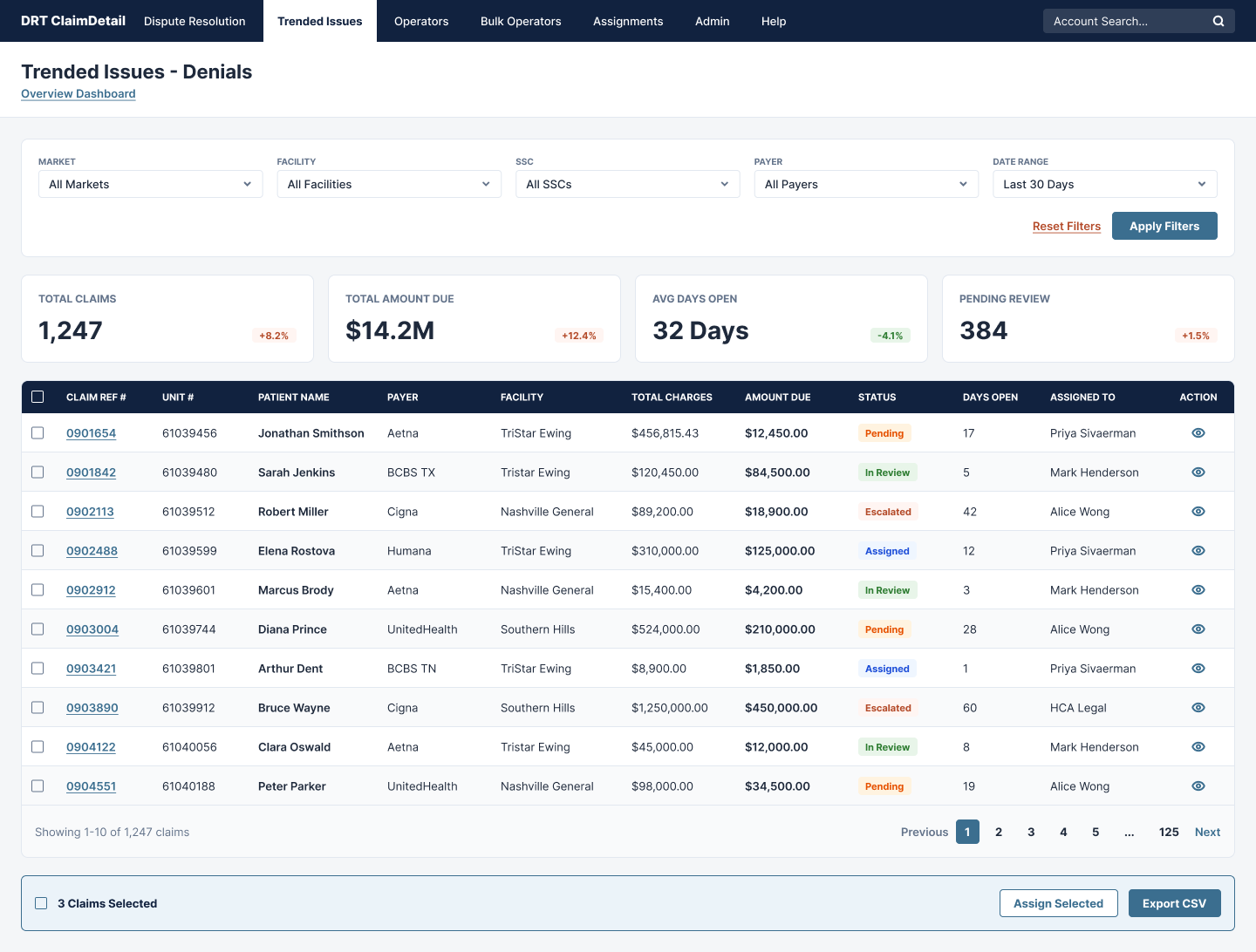
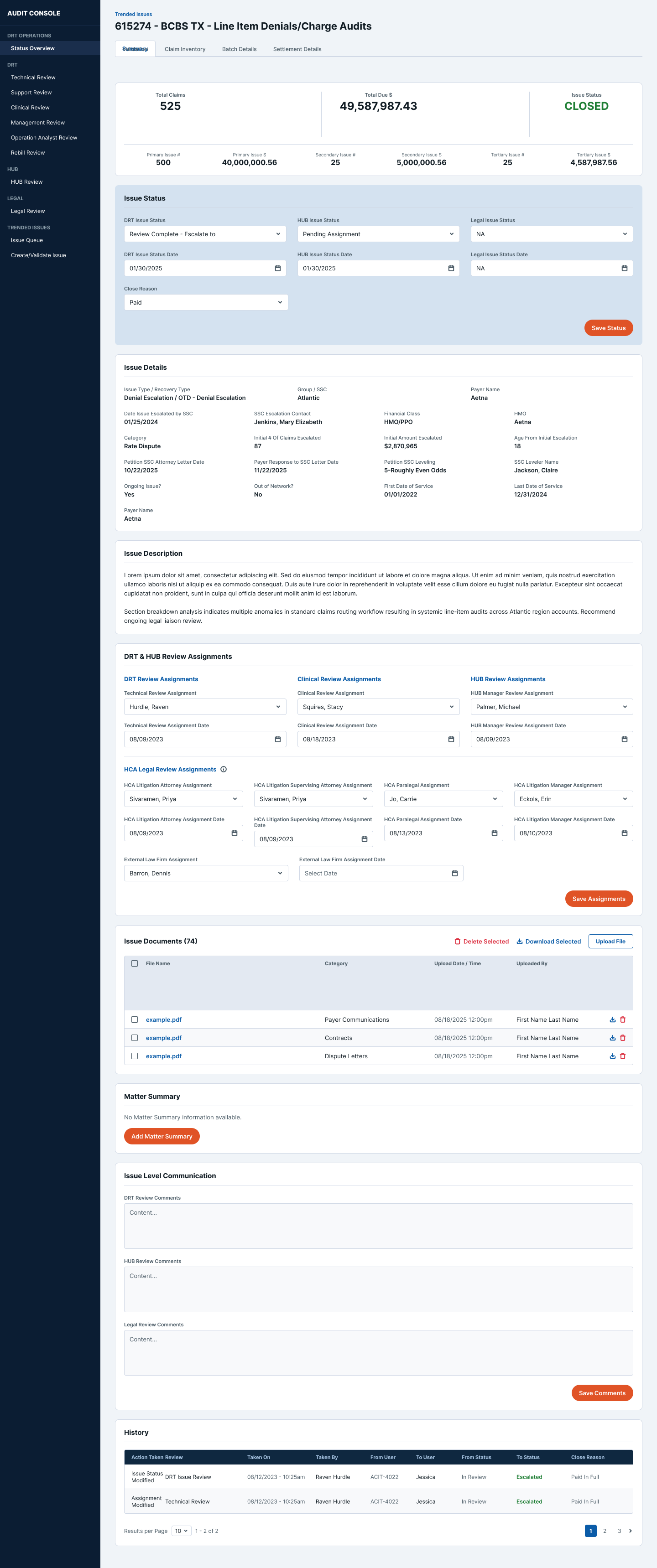
The finished system gave revenue cycle teams a single, shared workspace for every stage of the dispute process: from claim intake and assignment through review, escalation, adjudication, and reporting.
Paid for itself in recovered reimbursements.
The Dispute Resolution Workflow tool was delivered and adopted by HCA's revenue cycle teams. The system replaced a fragmented, email-and-spreadsheet process with a structured, trackable workflow that gave staff clarity on what needed to happen next and gave leadership visibility into the health of the dispute pipeline.
The tool recovered more in insurance reimbursements than it cost to build. Case continuity no longer depended on individual staff knowledge — the workflow held the history so anyone could pick up where someone else left off. Leadership got real-time visibility into dispute status, team workload, and recovery rates. Time spent reconstructing case history before taking action dropped significantly. And the process itself became consistent and repeatable, built to scale with the organization rather than straining under growth.
By systematizing a process that had previously let cases fall through the cracks, HCA captured revenue that would otherwise have gone uncollected.
What I took away.
This project reinforced something I carry into every engagement: the most important design work often happens before a single pixel is drawn. The journey mapping and service blueprinting we did early on gave us a shared understanding across HCA and Nexient of what the process actually looked like, where it was failing, and what success needed to mean. Without that foundation, we would have built a cleaner version of the existing chaos.
Working in a player-coach capacity, I found that staying close to the design work while leading the team made me a more credible partner to my Nexient designers and our HCA counterpart, and helped us move faster. The team could make decisions with confidence because we had done the research together and trusted the same evidence.
Need research-backed UX leadership on your next engagement?
Whether you're rethinking a flagship product, scaling a research practice, or trying to make sense of complex user behavior, I'd love to talk.